What is yet to come

Hello all, welcome one more time to my blog. This time will be talking about those trends and new technologies that will shape the tourism industry for the next years to come.

When we think about future, we inmediatly think about humanoids, flying cars, lunar expeditions, clones, bioprosthetics, teletransportation and many more revolutionary invents that will change the way we live. If we think about it, those ‘invents’ are not far from being part of our daily life, car manufacturers are way ahead on planning the launch of self-driven vehicules, better know as smart cars. Some companies are also working on lunar expeditions and return trips to the moon which were unthinkable few decades ago. It is only a matter of time before we start seeing robots in our daily life. In other words, the future is here and it will bring a relentless progress to our world.

The Tourism and Travel industry will also benefit from the advances in technology that are soon happening. Starting from the way we think about travel to the way we travel itself. In a few years from now we will have even more access to information about destinations around the world, the booking process will be simplified and more secure by using facial recognitions or our biometrics to identify us. Imagine being at a resort sitting next to the pool with your friends and having a robot delivering your drinks, cool right? And what if I tell you that they are also thinking about “Multi-lingual brain implants”? Yes, you will be able to travel the world without having to deal with the language barriers that each culture and country presents.

The Online version of The Guardian, published an article called “The future of travel: what will holidays look like in 2024?” The article, based on a Skyscanner Travel Report, mentions a few ideas of how tourism will look like in the future. I will be listing some of the most interesting ideas below:

  • Virtual rooms: they mention that hotel rooms will be digital interactive spaces that will basically do everything for us, from pillows waking you up in the morning to smart showers that will let you know you when you are clean and ready to step out from the bathroom. I personally prefer the traditional way of doing things but I guess we will all adapt.
  • Lunar trips: specialists are currently planning on what could be the next dream trip of all times, vacations at the moon. They are even thinking on building a hotel so they can actually send people for a trip t the moon. I mean, why not, right?
  • Virtual reality destination testing: as I have mentioned on my pasts posts VR is a great tool for travelers to feel a little bit more what their next destination looks like. They came up with this idea of virtually traveling to the destination, looking around and “testing” it to basically know if you will like it before you actually travel. So, no risk of wasting your money.
  • Become polyglot in a day: this is perhaps the most crazy idea they came up with, however, it is also one of the most attractive ones to me. They say that you could become fluent in many languages with a multi-lingual brain implant! Yes, It sound a bit crazy right now but if it actually becomes real I wouldn’t think it twice

Seems to me like our future is going to be full of new possibilities and new experiences may come knocking on our doors, how ready are we for them? How long must we wait? How much fun we could have? I’ll leave it to you to answer those questions because I have no idea, all I know is that I am excited!

Thanks for reading!
Smart Travel

There are five stages in the travel booking process: dreaming and getting inspired, searching and planning, booking, experiencing and sharing. Thanks to the development of Artificial Intelligence tourists now have several tools that allows them to have a more satisfactory experience while planning their vacations. Today, I will talk about how can tourists use Artificial Intelligence on each of the stages.


The first stage and probably one of the most important ones is the dreaming and inspiring stage. This stage of the booking process is going to determinate the type of travel and destination where the travelers will be going to. For this reason, clients tend to search for creative and interesting ways of seeing a destination. A good example of this could be Virtual Reality and Augmented reality. It is very common to see these types of posts or images on social media with more frequency nowadays, destinations’ official Instagram profiles, travel inspiration sites and similar pages are sharing these types of posts so the viewers can see destinations from a different perspective other than just pictures and regular videos.

Following the dreaming and inspiring stage there is the searching and planning stage. On this stage travelers will basically start organizing their trips, searching for reliable information about their future destination and plan their whole itinerary according to their preferences and interests. Utrip, is an app that creates tailored itineraries following the preferences of the clients, the system asks the client for basic data and interests such as preferences between types of travel, types of accommodation, past destinations and so on. With all this data the app is able to find or create the itinerary that best suits the client providing a personalized and exclusive service.

Next stage, booking. On this stage they will materialize their dreams and actually book what they have planned on the previous stages. There are several tools that assist clients on the booking stage. Either for hotels or flight tickets, resorts or car rentals, there is already an app created to provide the service using AI. Most booking websites are currently using chatbots to assist the visitors on their booking process. As we have mentioned before, chatbots are simulation chats created to provide on-time assistance by using artificial customer service agents. Besides this tool we also have actual booking apps that use data analysis and learning to provide real time responses, Hopper and Booking.com are good examples. These apps collect data and give recommendations of best prices or best choices according to the information the client provided and the data previously collected.

Once travelers have dreamed, planned and booked their travel plans, the next steps are more tangible than the previous ones. On the experiencing stage, it is time to explore and discover new destinations. After the completion of their trips clients usually like to share and comment about the destination, places and attractions they visited. They leave comments about the service and the quality of products and also give a rating if it’s possible.

As you can see from all the mentioned above, Artificial Intelligence has positive effects on the booking process and assists travel providers give a customized service in order to create unforgettable experiences. Thanks for reading!

Tech Travel Trends

Today we will go over some trends that are emerging in the travel sector or are already out there but are gaining popularity. As you may now, technology is taking over the world, including everything related to tourism, there are some new trends that tourism professionals and tourists are using to benefit from such as Virtual Reality, Smart Apps, Concierge robots, smart luggage, smart hotel rooms, facial recognition, Augmented Reality, Online bookings and many more!


Let’s begging with some trends that are becoming popular among travelers.

Nowadays, travelers feel more comfortable by doing the booking procedure by themselves, from planning the whole according to their preferences to actually booking the tickets or travel products they will need. For this, tourists are using websites and apps. Some websites such as Expedia.com, Travelocity.com and so on. On the other side, there are smart travel apps which provide a customized service to the users, these apps use Artificial Intelligence to differentiate them from regular booking apps. à

Have you heard about Hopper?

Hopper is an app specialized in finding the best deals for flights, send alerts for lower prices and similar itineraries. The attractive of this app is that it uses machine learning to analyze the data and give price predictions to the clientele. It will advise travelers to book at the moment when they make the search or it will advise them to wait because according to the statistics it might drop.

This is just an example of how Artificial Intelligence is an useful tool for travel providers and travelers.

What about FLIO?

This is an app for travelers who have a layover at unknown airports, which is very common when you are taking long flights. The app will ‘learn’ about the airport the user will land to and will provide relevant information about the terminal such as where to eat, where are the lounges located and more.


Let’s talk about one of the most promising tech travel trend: Virtual Reality.

Virtual Reality along with Augmented Reality have been one of the most entertaining uses that we have given to technology. Travel experts have found the way to include this attractive and entertaining tool into the travel sector. They have created apps and websites where travelers can find several destinations around the world and virtually travel to the virtual surroundings of tourist spots, hotels, attraction and more by just watching VR videos. These videos give the opportunity to the travelers to have a similar feeling of how they potential future travel destination looks like and see it from a different perspective, close to reality. Augmented reality has basically the same objective as VR however it is an augmented picture which shows more details of what a tourist spot looks like.

For travel agents, VR and AR became useful sales tools. In order to close sales, agents will show VR videos to the clients so they can convince themselves that they actually like the place they’re travelling to and convince them to go.

Not only travel agents are using VR but also Airlines and travel providers use it for marketing purposes and to enhance travel experiences. Airlines will show cabins in advance to increase ticket sales, as an example.

Watch this quick and interesting video about how companies and using Virtual Reality to enhance the travel and booking experience.

Thanks for reading!

AI: hotels of the world

On the last post you were able to learn a bit more about how exactly AI is changing the tourism industry. Today I want to share with you interesting facts about how AI is being used at hotels around the world.


The Artificial Intelligence is a great tool to increase customer satisfaction and guest loyalty levels. It can be helpful to the hospitality industry in many different ways; AI could be used to provide a personalized service to the guests and therefore create unique experiences and build loyalty. How? Artificial Intelligence can identify personal preferences of the clientele in order to provide personalized experiences and attract people to your hotel.

One of the most popular ways to use AI to help the hospitality business is by simplifying the booking process and consequent staff optimization. Many hotels are using chatbots on their website to make the process more user friendly and satisfactory. The chatbots are programs designed to simulate conversations with real users. This chatbots assist the client on the booking process by answering hotel-related questions, inquiries about the property and even to take special requests from the clientele. By applying this strategy, the hotel will provide a customized and pleasant booking experience for the guests and will also increase their expectations towards the service expected at destination.

Also, AI is an useful tool to manage and control feedback from the clientele. Artificial Intelligence can help hoteliers by quickly going over the comments, reviews and social media posts mentioning an establishment and analyzing the data obtained to provide an overview about what is being said about a hotel allowing the manager to respond efficiently and accurately.


Now, have you heard about concierge robots?

It is becoming a trend in the hospitality industry to incorporate robots as concierges to increase the customer satisfaction levels. These robots will definitely change the travel experience in all senses. A concierge robot is basically there for the clientele to assist on whatever they need and want. The guests will be welcomed at the property and guided to the front desk by a robot, it will offer its assistance at any time for the customers. Some of the tasks that a concierge robot is able to do is to find attractions, activities, excursions and entertainment in general for specific clients according to their preferences. They will also make recommendations of restaurants, shows and more according to what they have learned about specific guests. If a guest is looking for a restaurant for a romantic evening he or she can easily text the concierge robot to get suggestions, if a guest wants to order food they just need to contact the concierge and it will get done, if guests encountered an issue or have any complaints, the concierge will be able to assist. Now, if there is something that a concierge robot can not do, it will get someone who can get it done.

Here are a couple of examples of concierge robots:

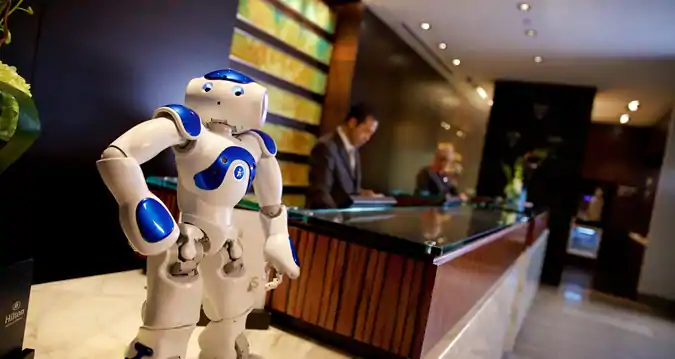
  • Hilton Hotels: Connie

Connie is one of the first and most popular concierge robots created. She is able to inform guests about places of interest, give dining recommendations and general information about the hotel.

Source: www3.hilton.com
  • Aloft Hotels: A.L.O.

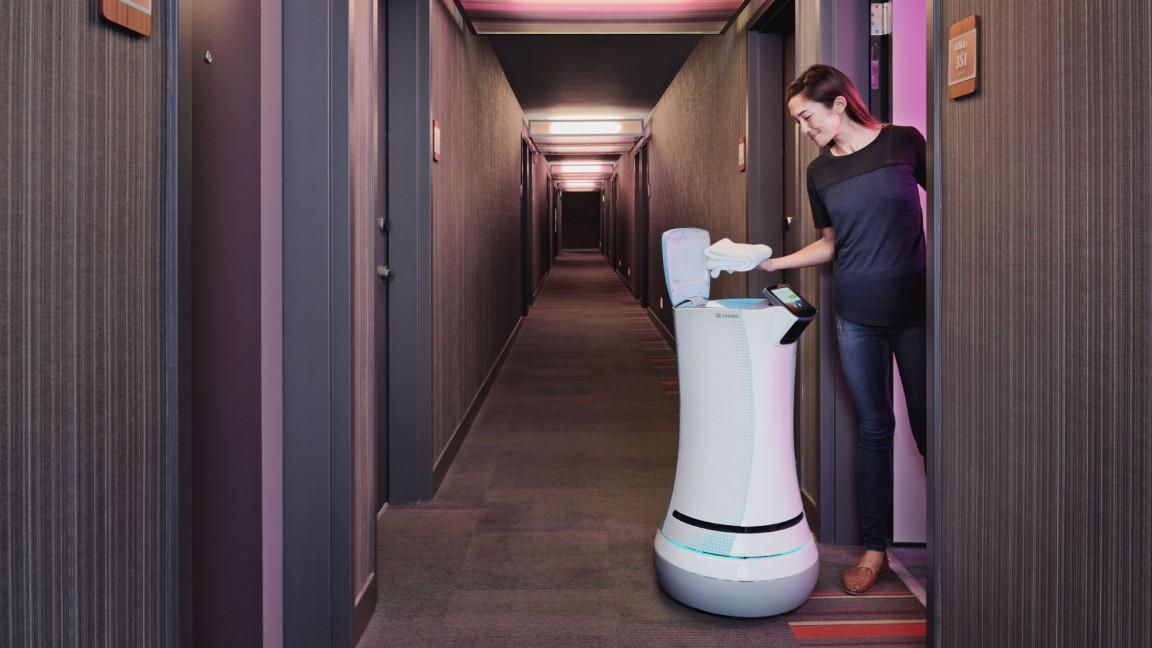
A.L.O. was originally created to make deliveries throughout the hotel. However, it is now used to provide information to the clientele and answer guest inquiries whenever it is required.

Source: FORBES

Isn’t it fantastic the way technology is influencing the tourism industry? While some people fear the power of technology, the tourism professionals are using it for the benefit of the tourism and travel industry. They are creating an applying new trends and new tools that increases the customer satisfaction levels and most importantly, help create wonderful and unforgettable experiences.

Thanks for reading!

How AI is changing the Tourism Industry

Have you ever wondered how technology will modify our current travel habits? or the way we travel itself! have you already noticed all the changes that Artificial Intelligence is causing in the tourism industry?

The constant innovations and advances in technology is definitely changing the world that surrounds us, it changes from the way we have breakfast every morning to the way we communicate with others. The tourism industry is not an exception, big changes are being done day by day to keep up with the newest trends that technology brings nowadays.

It is the beginning of a new era of innovations and amazing things to come, and we are very lucky to witness it.

One of the biggest changes that AI brought to the tourism industry is the way travelers book their trips. Decades ago people had to use travel agents services to book their flights, hotels or cruises, and the travel agent had to call the suppliers to get information about the product and then proceed to book it. Nowadays, technology has made it way easier! With the use of chat bots we do not necessarily need to contact a travel specialist to book a flight or a vacation package. We have access to all those products, just one click away! There are several booking and reservation systems that enables online travel agencies to promote products on the internet by learning the tastes, needs and wants of the clientele. Clients can access one of those websites and book the flight they need in matter of minutes! Going from manual bookings to automated booking systems made a big difference, however that’s not all. The customer service level has even been influenced by Artificial Intelligence providing services such as online live chats to assist the clients on booking travel products. There are also travel applications that assist people to plan their trips according to what the app learns from their travel preferences.

The immersion of Artificial Intelligence in the tourism industry and the consecutive creation of online travel agencies doesn’t actually mean that the days of travel agents are gone. It is now a challenge for travel specialist to keep on selling and promoting their products. They are using AI as well! Marketing and promotion specialist came up with the idea of using Virtual Reality to show new destinations to potential clients and help them decide where to go for their next vacations.

Leaders in the tourism industry are actively thinking of applying Artificial Intelligence to the whole process of traveling, not only the booking procedure. For example, there are hotels that are using robots as front desk, check-in and check-out agents to maximize efficiency and decrease staff expenses. It is certainly an attractive and impressive experience for the travelers. Using the same idea, many restaurants and bars around the world are also using Artificial Intelligence to “change the game” and attract more clients; they are using robots as waiters and bartenders, imagine being served by a robot? Isn’t it awesome?

The truth is that sooner than expected we will see robots as tour guides and self-piloted airplanes changing the tourism industry for good.